


Barcode scanners for industry, logistics and healthcare
Our barcode scanner series
Each series has its own page with specifications, variants, comparison and FAQs. Prices and availability are in the shop.
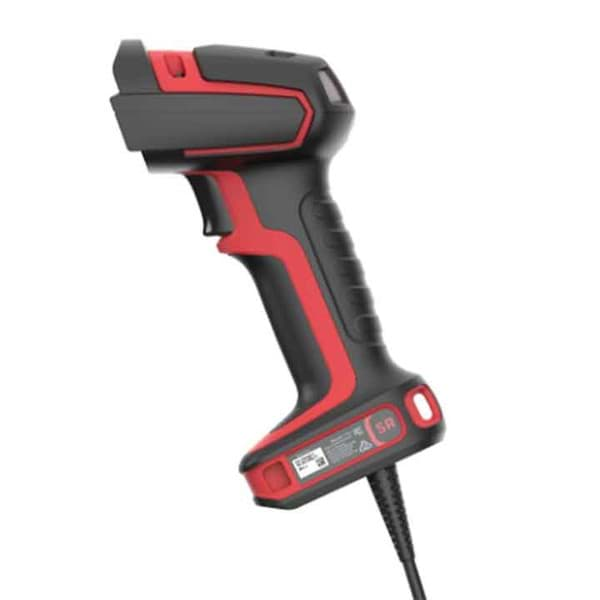
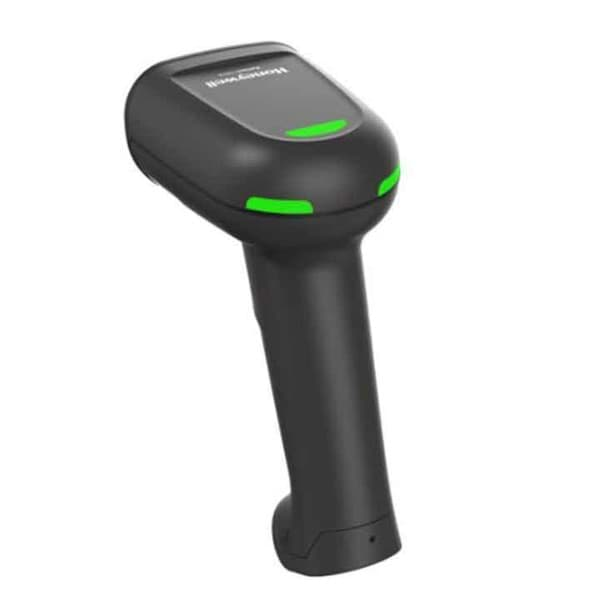
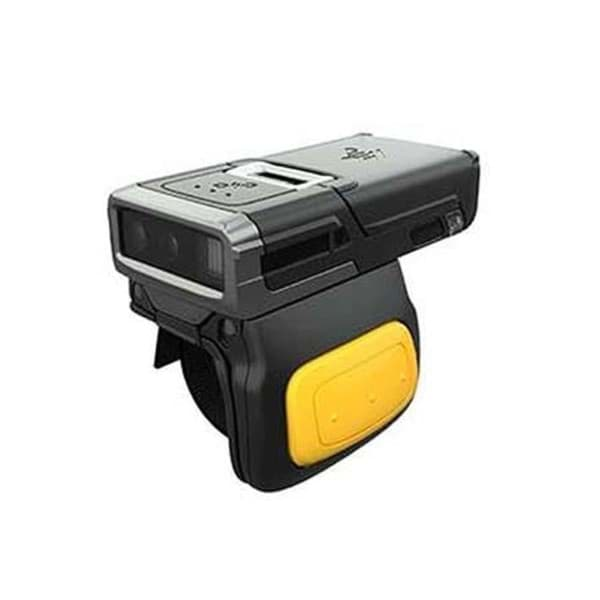
Which scanner fits which application?
| Application | What matters | Suitable series |
|---|---|---|
| Office, shipping, goods receipt at short distances | all-round reader, comfortable in presentation mode | Xenon Ultra 1960g / 1962g |
| Healthcare and laboratory | disinfectant-ready housing, quiet operation | Xenon Ultra Healthcare |
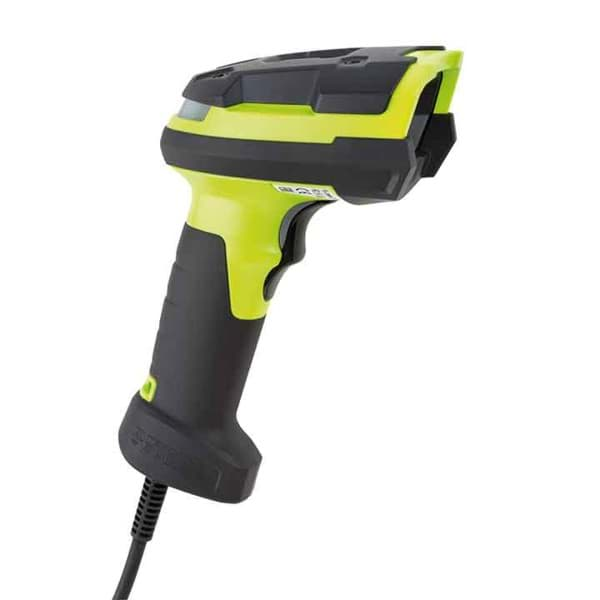
| Warehouse, manufacturing, chilled and frozen areas | IP65 and IP68, 3 m drops, operation down to -30 °C when corded | Granit Ultra 2100i / 2105i, Zebra DS3608 / DS3678 |
| High-bay racking, forklifts, loading | long range up to 7.5 m (20 mil) or up to 32 m (100 mil) | Granit Ultra XLR, Zebra DS3678-XR |
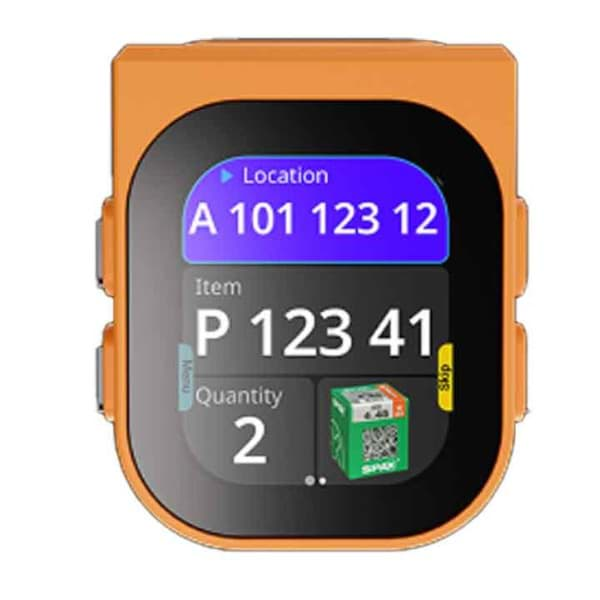
| Hands-free picking | low weight, trigger on the finger or hand strap | Zebra RS5100 / RS2100, ProGlove MAI |
| Direct part marked components (DPM) | DPM-capable engine, HD optics for small codes | Zebra DS3678-DP/DPX, Granit Ultra 2100i / 2105i |
| Hazardous areas | approval for Zone 1/21 or Zone 2/22 | Bartec BCS36xx ex / SC9 |
The series compared
| Series | Form factor | Connectivity | Max. reading distance | Sealing | Operating temp. |
|---|---|---|---|---|---|
| Granit Ultra 2100i / 2105i | pistol, ultra-rugged | corded or Bluetooth | 7.5 m (XLR, 20 mil) | IP65, IP68 | -30 °C (corded) to 50 °C |
| Xenon Ultra 1960g / 1962g | pistol, all-round | corded or Bluetooth | 1 m (standard range) | IP52 | 0 °C to 50 °C |
| Zebra DS3608 / DS3678 | pistol, ultra-rugged | corded or Bluetooth | 32 m (XR, 100 mil) | IP65, IP68 | -30 °C (corded) to 50 °C |
| Zebra RS5100 / RS2100 | ring, back of hand | Bluetooth | standard range | IP65 / IP54 | RS2100: 0 °C to 50 °C |
| ProGlove MAI | wearable with display | BLE 5.4, Wi-Fi | about 14 m (100 mil) | IP65 | -10 °C to 50 °C |
| Bartec BCS36xx ex / SC9 | Ex pistol, smart scanner | corded, Bluetooth, 5G | 12.2 m (SC9) | IP65, SC9 IP68 | -20 °C to 50 °C (IS) |
Reading distances refer to different code sizes and are only roughly comparable. Details on the series pages.
Source: manufacturer data sheets and product pages, as of October 2026. Subject to change; individual variants may differ. Prices and delivery times are available in the shop.What to know before you buy
1D or 2D?
1D barcodes such as EAN or Code 128 consist of bars, 2D codes such as DataMatrix or QR code of dots or squares and store more data in a small area. Anyone buying today almost always chooses a 2D imager: it reads both types, in any orientation and also from displays. 1D-only devices such as the Zebra LI3678 only make sense if 2D codes will definitely not come, for example GS1 DataMatrix in pharma and medtech.
Range and mil
How far a scanner reads depends on the code size. It is given in mil: 1 mil is a thousandth of an inch, i.e. 0.0254 mm, measured at the narrowest bar. A 20 mil code is typical for shipping labels, 100 mil for rack location signs at height. Variants are usually called HD (high density, close), SR (standard), XR or ER (extended) and XLR (very long).
Corded or cordless?
Corded scanners are cheaper, need no battery and often work across a wider temperature range in the cold. Cordless Bluetooth scanners offer freedom of movement; according to manufacturers, Class 1 devices reach up to 100 m line of sight. Chargers, spare batteries and whether Bluetooth interferes with Wi-Fi matter; some devices have a dedicated mode for this.
Sealing and ruggedness
The IEC 60529 rating describes protection against dust and water: IP52 means dust protected and protected against dripping water when tilted, IP65 dust-tight and protected against water jets, IP68 dust-tight and protected against continuous immersion under manufacturer conditions. Drop height and number of tumbles show how much a device withstands in daily use.
Direct part marks (DPM)
With DPM, the code is lasered, dot-peened or etched directly onto the part. Such codes have little contrast and often reflect; this requires special engines such as the DP and DPX variants of the Zebra DS3678 or the DPM-capable Granit Ultra scanners.
Explosion protection
In hazardous areas only devices with suitable approval may be used. Zones 1 and 21 require stricter devices than Zones 2 and 22; a Zone 1 device may generally also work in Zone 2. The operator’s risk assessment defines which zone applies.
What OPAL adds
Frequently asked questions
Which barcode scanner is the right one?
It depends on three questions: environment (office, warehouse, cold, hazardous area), distance and size of the codes, and whether the device must be cordless. The decision guide above maps typical applications to suitable series.
What does mil mean?
1 mil is a thousandth of an inch, i.e. 0.0254 mm. It refers to the narrowest bar width of a barcode. The larger the value, the farther a scanner can read the code.
Which scanners are suitable for freezer warehouses?
Corded, the Granit Ultra 2100i and Zebra DS3608 are specified down to -30 °C; cordless, the Granit Ultra 2105i and Zebra DS3678 down to -20 °C. For wearables, a freezer battery is available for the Zebra RS5100. Zebra also recommends a heated holder against condensation in freezers.
How much does a barcode scanner cost?
Current prices and availability are in the OPAL Barcode Shop. For projects with many devices, accessories, configuration and service we prepare a quotation for you.
We need a replacement for an older device. Can OPAL help?
Yes. For older scanners, for example from Intermec or the Xenon XP and Granit XP series, we recommend the right successor and check which cables, holders and settings can still be used.