RFID labels and transponders
Key facts
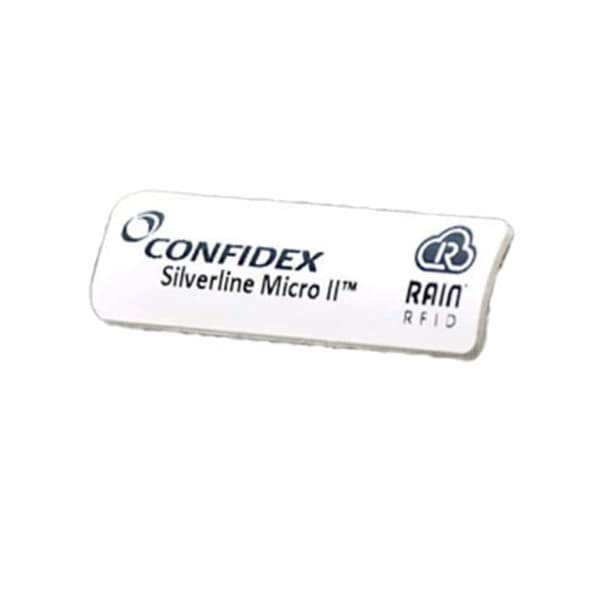
An RFID label consists of an inlay with chip and antenna, embedded in a printable face material with adhesive. Which type fits depends mainly on the surface: standard paper or PET labels are designed for cardboard and plastic. On metal and close to liquids you need labels whose antenna is tuned for it, such as the Zebra on-metal label with Confidex Silverline Micro II.
Most types in the range work in the UHF band to EPC Class 1 Gen 2 (ISO 18000-6C) and can be printed and encoded in an RFID printer. For containers to VDA 4994 there are Kanban and master labels from Confidex as well as OPAL labels with a UCode 7XM chip. The Faubel Logistics Label from CCL Faubel is a battery-free e-paper label with HF RFID whose display can be updated up to 1 million times according to the manufacturer. Basics on frequencies and form factors are covered in the RFID overview.
- Tagging cartons, pallets and load carriers with UHF RFID
- Metal tools, machine parts and containers (on-metal labels)
- Industrial environments with repeated heavy use (Confidex Ironside)
- Kanban and container loops to VDA 4994
- Changing information on the load carrier without reprinting (Faubel Logistics Label)
- Visual identification only, without bulk reading: barcode labels are sufficient, see label media
- Standard paper labels directly on metal or liquid containers: choose on-metal types there and test them first with an RFID reader
- 125 kHz applications (LF): use LF readers such as the GiS TS-R380, see RFID readers
- Encoding labels without suitable hardware: you need an RFID printer with approved media
Detailed specifications
| Zebra on-metal 45 x 13 x 1.3 mm (Confidex Silverline Micro II) | Confidex Casey 92 x 24 mm | OPAL VDA 4994 KLT1 | |
|---|---|---|---|
| Type | On-metal label | General-purpose logistics label | Container label to VDA 4994 |
| Chip | Impinj Monza R6-P | NXP UCODE G2iL | UCode 7XM |
| Protocol | EPC Class 1 Gen 2, ISO 18000-6C | same as left | same as left |
| Frequency | 865 to 869 MHz (ETSI), 902 to 928 MHz (FCC) | 865 to 868 MHz (EU), 902 to 928 MHz (US) | 860 to 960 MHz (worldwide) |
| Memory | EPC 96 or 128 bits, user 32 or 64 bits, TID 96 bits | EPC 128 bits, TID 64 bits | EPC 448 bits, user 2 kbits |
| Dimensions | 45 x 13 x 1.3 mm | 92 x 24 mm | 80 x 209.55 mm |
| Face material | printable white PET | printable white synthetic face | glossy board, 200 g/m², printed yellow |
| Adhesive | high-performance acrylic | permanent | not specified |
| Surface | metal and painted metal | various surfaces, test first as advised by the manufacturer | not specified |
| Read range (manufacturer) | up to 3.5 m on metal, up to 2 m on liquid, up to 1.5 m on plastic (theoretical, 2 W ERP) | not specified | not specified |
| Operating temperature | -35 °C to 85 °C, peak 110 °C for 10 minutes | -35 °C to 85 °C | not specified |
| Protection rating | IP68 | same as left | not specified |
| Weight | 0.3 g | 0.6 g | not specified |
| Roll | 600 labels per roll, 76.2 mm core | not specified | 650 labels per roll, 4 rolls per box, 76.2 mm core |
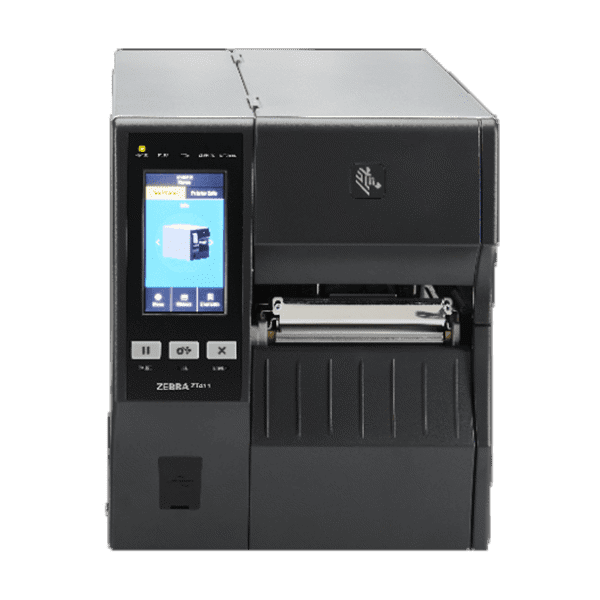
| Printers | Zebra ZT410 RFID Silverline, ZT411 On Metal (data sheet) | not specified | including Zebra ZT410, ZT610, Toshiba TEC EX5 (shop data) |
Source: manufacturer data sheets and product pages, as of October 2026. Subject to change; individual variants may differ. Prices and delivery times are available in the shop.
Variants and accessories
| Type | Manufacturer | Chip / technology | Size | Note |
|---|---|---|---|---|
| Faubel Logistics Label | CCL Faubel | E-paper with HF RFID, 13.56 MHz, ISO 15693, battery-free | Display 1.5, 2.7, 2.9 or 4.2 inches | IP65, 0 °C to 50 °C, up to 1 million updates according to the manufacturer |
| UHF labels, paper and PET | Toshiba TEC | Impinj Monza R6, Monza R6-P, Monza 4D | 41 x 24 mm to 100 x 26 mm | Read range 5.5 m to 10 m depending on type (shop data) |
| UHF labels, paper and PP | Zebra | Monza 4D, Monza 5, Monza R6-P, Higgs 4 | 73 x 17 mm to 101.6 x 152 mm | Thermal transfer or direct thermal, 180 to 5,000 labels per roll |
| On-metal labels | Zebra | Silverline Micro with Monza 4i | 45 x 13 mm, 60 x 25 mm | Polyester or white PP, 800 or 500 labels per roll |
| VDA 4994 Kanban and master labels | Confidex | UHF, chip not specified | 80 x 208 mm, 150 x 208 mm | Yellow with sensor mark |
| VDA 4994 labels KLT1 and A5 | OPAL | UCode 7XM (KLT1) | 80 x 209.55 mm (KLT1), A5 | Yellow with sensor mark |
| Hard tags Ironside, Ironside Slim, Steelwave Micro II, Survivor | Confidex | Impinj Monza 4QT, EPC 128 bits, user 512 bits | 38 x 13 x 4.5 mm to 155 x 26 x 14.5 mm | Survivor up to 18 m read range (shop data) |
| Ironside Micro | Confidex | UHF 865 to 869 MHz, EPC 96 bits, 512 bits extended memory | 27 x 27 mm | not specified |
| NFC tags Ironside Micro NFC, Steelwave Micro2 NFC | Confidex | NXP NTAG203, 144 bytes user memory | 38 x 13 x 4.5 mm (Steelwave) | Read distance with a smartphone 30 mm (Ironside Micro NFC) |
Accessories and matching devices
- Zebra 5095 resin ribbon, recommended for the Silverline Micro II in the data sheet
- RFID label printers for printing and encoding: RFID printers
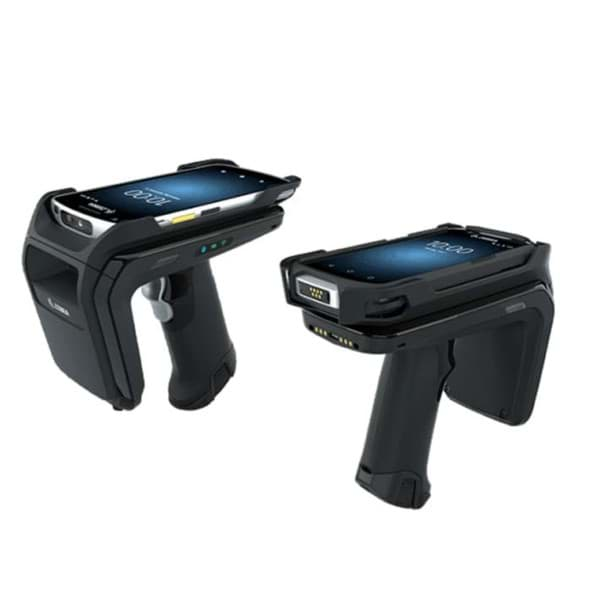
- Handheld and fixed readers for checking and capturing: RFID readers
- Barcode labels and ribbons without RFID: label media
Standard UHF label or on-metal label?
| Zebra on-metal 45 x 13 x 1.3 mm | Toshiba TEC UHF label 54 x 34 mm PET | |
|---|---|---|
| Surface | metal and painted metal | not specified |
| Chip | Impinj Monza R6-P | Impinj Monza R6 |
| EPC memory | 96 or 128 bits | 96 bits |
| Construction | 45 x 13 x 1.3 mm, white PET | 54 x 34 mm, white PET, permanent |
| Read range | up to 3.5 m on metal (manufacturer data) | up to 5.5 m (shop data, surface not specified) |
| Labels per roll | 600 | 3,500 |
| Approved printers | Zebra ZT410 RFID Silverline, ZT411 On Metal | not specified |
On cardboard, plastic and paper a standard UHF label is sufficient: it is thinner and comes with more labels per roll. Directly on metal, however, a standard antenna loses much of its range, so an on-metal label is the right choice there. With on-metal labels, check the manufacturer’s printer approval. Suitable devices are listed under RFID printers, and our consulting team can help you choose.
What OPAL adds
Frequently asked questions
Which RFID label is suitable for metal?
Standard UHF labels are tuned for cardboard and plastic, and their range drops sharply directly on metal. For metal there are on-metal labels such as the Zebra 45 x 13 x 1.3 mm label with Confidex Silverline Micro II, which according to the manufacturer can be read at up to 3.5 m on metal. For repeated heavy use there are rugged industrial transponders such as the Confidex Ironside.
Can I print and encode RFID labels myself?
Yes, with an RFID-enabled label printer that writes and verifies the chip during printing. Check the approval: according to the data sheet, the Silverline Micro II is intended for the Zebra ZT410 RFID Silverline and the ZT411 On Metal. Suitable devices are listed under RFID printers.
How reliable are the stated read ranges?
Manufacturers give theoretical values, calculated for a non-reflective environment, antennas with optimum directivity and the transmit power of 2 W ERP permitted in Europe. In practice, range depends on surface, reader, antenna and environment. Always test labels on the actual objects.
What is the difference between Monza R6 and Monza R6-P?
Both are UHF chips from Impinj. According to the shop, the Toshiba TEC labels with Monza R6 have 96 bits of EPC memory, while the Monza R6-P versions have 128 bits of EPC plus 64 bits of user memory. You only need user memory if further data besides the EPC number is to be stored on the chip.
What is the Faubel Logistics Label?
A passive e-paper label with HF RFID (13.56 MHz, ISO 15693) from CCL Faubel. It needs no battery and draws the energy for updates via NFC. According to the manufacturer, up to 1 million updates are possible, and the housing is rated IP65.
How do I find the right label for my application?
First clarify surface, read distance, temperature and printing method. Then test two or three types with your reader on the actual objects. We support you with selection and testing as part of our consulting.
Data sheets and manufacturer information
The manufacturer provides data sheets, user guides and configuration guides on the product page. We are also happy to send you the documents directly.