


Labels and materials for barcode and label printers
Our label and material groups
Each material group has its own page with material data, kits, comparison and frequently asked questions. Prices and availability are in the shop.
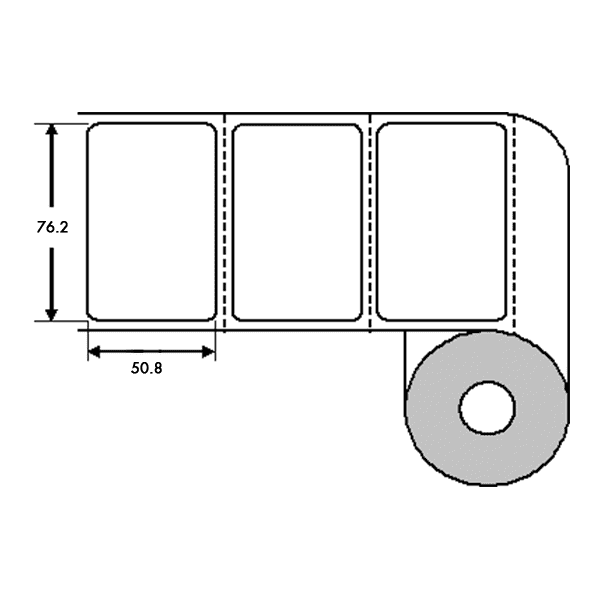
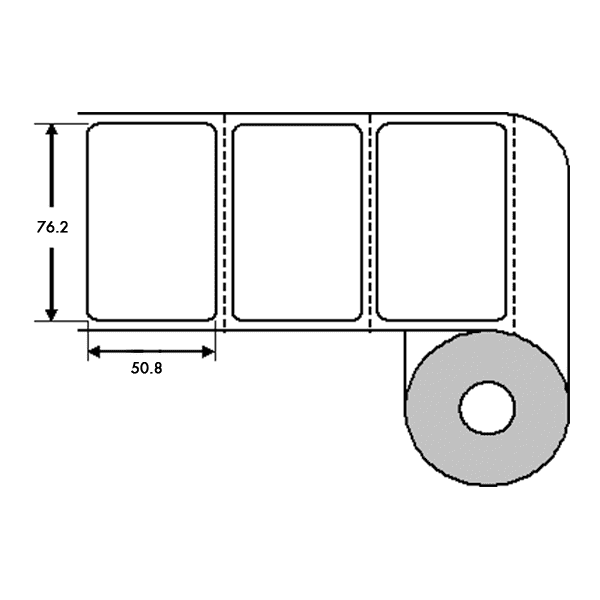
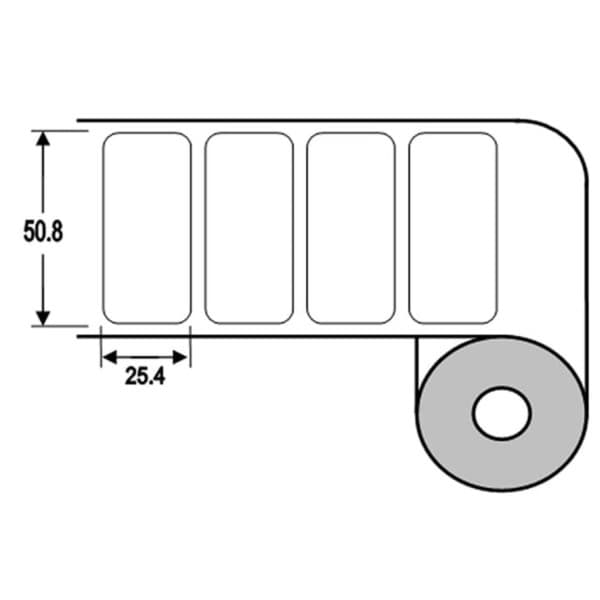
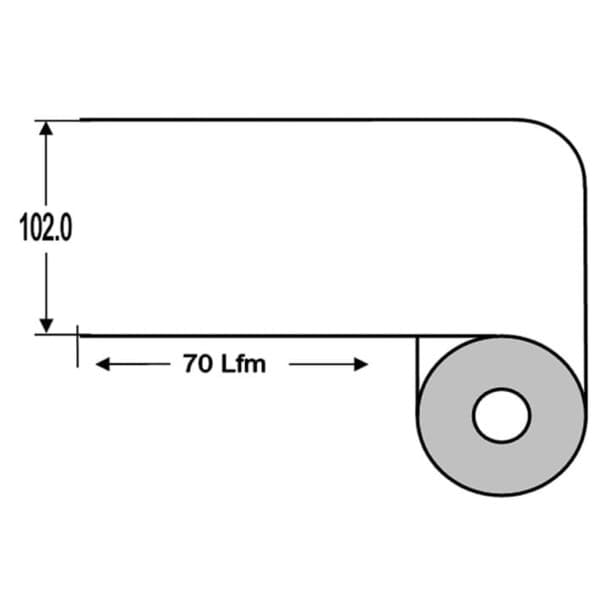
Which label suits which application?
| Application | What matters | Suitable material group |
|---|---|---|
| Shipping, picking, goods-in | short life, no ribbon, format and roll matching the printer | Direct thermal labels |
| Mobile printers | small core (19 mm) and small outer diameter | Direct thermal labels, Linerless labels |
| Article and product marking | print durability, material and ribbon as a pair | Thermal transfer labels and ribbons |
| Laboratory, freezer, cryogenic storage | adhesive and material for low temperatures, application temperature | Freezer and cryo labels |
| Asset inventory | extra-permanent adhesive, tamper evidence, resistance to cleaning | Security and asset labels |
| Rating plates | silver film, UL certification with matching ribbon | Security and asset labels, Thermal transfer labels |
| High volumes without liner waste | linerless printer, tests with your own printer | Linerless labels |
The series compared
| Material group | Print method | Face material | Adhesive | Temperature and resistance according to the shop | Formats in the shop |
|---|---|---|---|---|---|
| Direct thermal labels | direct thermal | Thermo Top paper, direct thermal film | permanent, removable on mobile D | for short-term labelling; film UV-stable and water-resistant | 50.8 x 25.4 to 99 x 148 mm |
| Thermal transfer labels and ribbons | thermal transfer | paper, PE film, silver film | permanent | PE film with resin ribbon smudge-proof | 50.8 x 25.4 to 148 x 210 mm |
| Freezer and cryo labels | thermal transfer | white coated polypropylene | permanent, acrylic-based | adhesion down to -196 °C, smudge- and scratch-resistant | 30 x 15 to 50.8 x 25.4 mm |
| Linerless labels | direct thermal | continuous direct thermal paper without liner | permanent, acrylic | not specified | 102 mm x 70 m, 105 mm x 22 m |
| Security and asset labels | thermal transfer | PE silver, paper with laminate, silver film | extra-permanent | smudge-proof, resistant to most cleaning agents | 50.8 x 25.4 to 66 x 30 mm |
Values according to the shop pages of the OPAL kits. Manufacturer values for Zebra materials are on the series pages.
Source: manufacturer data sheets and product pages, as of October 2026. Subject to change; individual variants may differ. Prices and delivery times are available in the shop.
What to know before you buy
Direct thermal or thermal transfer?
Direct thermal labels carry a heat-sensitive layer that the printhead darkens directly; no ribbon is needed. This is simple, but the image reacts to sunlight and heat: Zebra states up to one year indoors for its Z-Perform 1000D direct thermal paper. In thermal transfer, the printhead transfers ink from a ribbon onto the label. This means a second consumable, but depending on the combination produces considerably more durable prints. As a rule of thumb: if the label lives for days or weeks, direct thermal is enough; if it has to last months or years, choose thermal transfer.
Paper or film: PE, PP or PET?
Paper is the simple choice for cardboard and short to medium life. Films are generally more robust; according to the shop, the mobile D direct thermal film label, for example, is UV-stable and water-resistant. In the shop you will find PE film for product and asset labels, white coated polypropylene (PP) for freezer and cryo applications and PE silver for security labels. Polyester (PET) is the material for high temperatures and harsh environments: Zebra states -40 °C to 150 °C for its Z-Ultimate 3000T White polyester label and names rating plates, autoclave and outdoor use among its applications. Films generally require a wax/resin or resin ribbon.
Adhesive: application temperature and service temperature
Data sheets state two different temperatures. The minimum application temperature applies when the label is applied: surface and environment must be warmer. The service temperature range only applies once the adhesive has set, according to Zebra usually after 24 hours. Example Zebra Z-Perform 1000D: apply from 0 °C, service from -20 °C to 80 °C. Example Zebra 8000T CryoCool: apply from -29 °C, service from -196 °C to 88 °C. If you label goods that are already chilled, you therefore need an adhesive with a low application temperature. Permanent, extra-permanent and removable adhesives also differ.
Core and outer diameter to match the printer
The roll has to fit the printer mechanically. For mobile printers, the shop offers rolls with a 19 mm core and 58 to 60 mm outer diameter. Desktop kits run on 25 mm or 25.4 mm cores, kit A for example with an outer diameter of 110 mm. Large rolls sit on 76.2 mm cores with outer diameters up to 203 mm, such as the cryo kits DA and CA, and need a printer with a matching holder. Also check winding and print width. More labels per roll mean fewer roll changes, but a larger diameter. Your device’s values are in its data sheet; overviews are on our Label printers page.
Ribbon to match the material: wax, wax/resin, resin
In thermal transfer, label and ribbon form a pair. According to Zebra, wax ribbons suit coated and uncoated paper, wax/resin suits coated papers and many matte synthetics, and resin suits matte and gloss synthetics; Zebra describes some resin ribbons as resistant to chemicals and temperature. Besides the type, width, length, core and the position of the ink layer must match the printer, and the ribbon should be at least as wide as the label. The OPAL kits already include the matching ribbon in the box.
Test resistance rather than assume it
Statements such as smudge-proof, chemical-resistant or autoclavable always apply to a combination of label, ribbon and surface. For the 8000T CryoCool, for example, Zebra lists alcohol, IPA and bleach as recommended and acetone and MEK as not recommended, and advises testing every application beforehand. For the OPAL kits, the shop states resistance in general terms, such as smudge-proof or resistant to most cleaning agents. For critical applications, we test samples on your material: Labels and consumables.
What OPAL adds
Frequently asked questions
What information do you need for a custom label?
Format and quantity, the surface and the environment: temperature during application and in service, and contact with water, cleaning agents or chemicals. Also the printer model, print method, core diameter and the largest outer diameter the printer accepts. Send this information via the label request form.
Can I use labels from other manufacturers in my printer?
Usually yes, if print method, width, core, outer diameter and winding match. The shop pages of the OPAL kits list compatible printers, including models from Argox, Sato, Toshiba Tec, Zebra and the OPAL OD series. According to Zebra, linerless labels need a dedicated linerless printer.
How should I store labels and ribbons?
Follow the storage conditions in the data sheet. Zebra states six months at 20 °C to 25 °C and 40 % to 50 % relative humidity for the Z-Perform 1000D direct thermal paper, and one year at 22 °C and 50 % relative humidity for the 5319 ribbon and the 8000T CryoCool label.
Why is my label fading?
Usually it is direct thermal material, whose image reacts to light and heat. For its Z-Perform 1000D direct thermal paper, Zebra advises against long exposure to sunlight, extreme heat and PVC surfaces. For a longer life, switch to thermal transfer labels with a matching ribbon.
Are labels with RFID available?
Yes. The shop offers, among others, Zebra UHF RFID labels in paper or polypropylene for direct thermal or thermal transfer. We explain technology, inlays and selection on the RFID labels page.